Agencies are some of the best clients a freelancer can have. They already sold the project, they have more work than staff in busy months, and once you are on their list of trusted subcontractors, the work repeats. The hard part is the first email. Agency websites have a contact form that goes to a shared inbox, and the person who actually hires freelancers is rarely the one reading it.
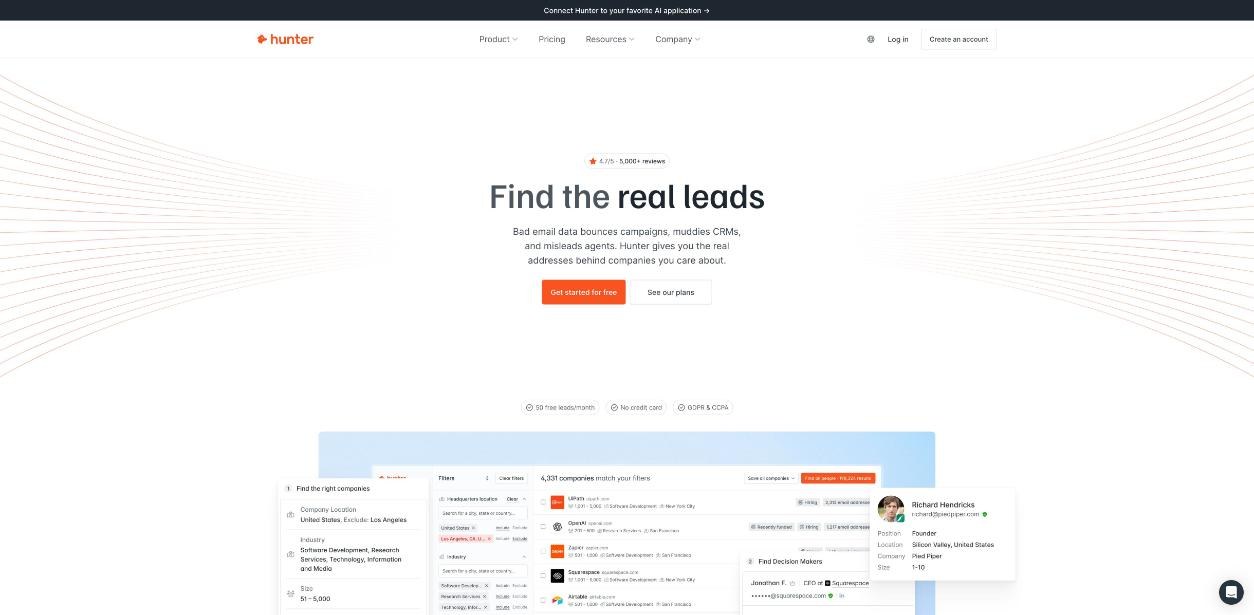
This is where Hunter.io fits. It finds and verifies professional email addresses from a company’s domain or a person’s name, and it can send short email sequences from your own inbox. I looked at it through one specific job: pitching 20 agencies a month as a white-label subcontractor, starting on the free plan. All prices, limits and credit rules below come from Hunter’s own pricing page and product pages as they read today.
Why agencies, and why not the contact form
When you pitch a direct client, you are selling a project. When you pitch an agency, you are selling relief: someone they can hand overflow work to without training them from scratch. That message lands with a specific person, usually a founder at a small agency, or a head of delivery, production or development at a larger one. A contact form sends it to whoever triages new business enquiries, and a subcontracting offer is not new business, so it often gets ignored.
The workflow I want is simple: identify the right person, find their work email, make sure it will not bounce, and send a short, specific note with one follow-up. Hunter covers the middle three steps.
How Hunter.io credits work, and why it changes the workflow
Before touching the tool, read the credit rules, because they decide which Hunter feature you should use. From the pricing page FAQ:
- 1 credit for each email found with Domain Search, Email Finder or Bulk Email Finder.
- 1 credit for up to 10 emails found with Bulk Domain Search.
- 0.5 credit for each email verified with the Email Verifier.
- No credit is used when an email is not found, or when a verification comes back as unknown.
- The same search or verification is counted once per billing period, even if you repeat it.
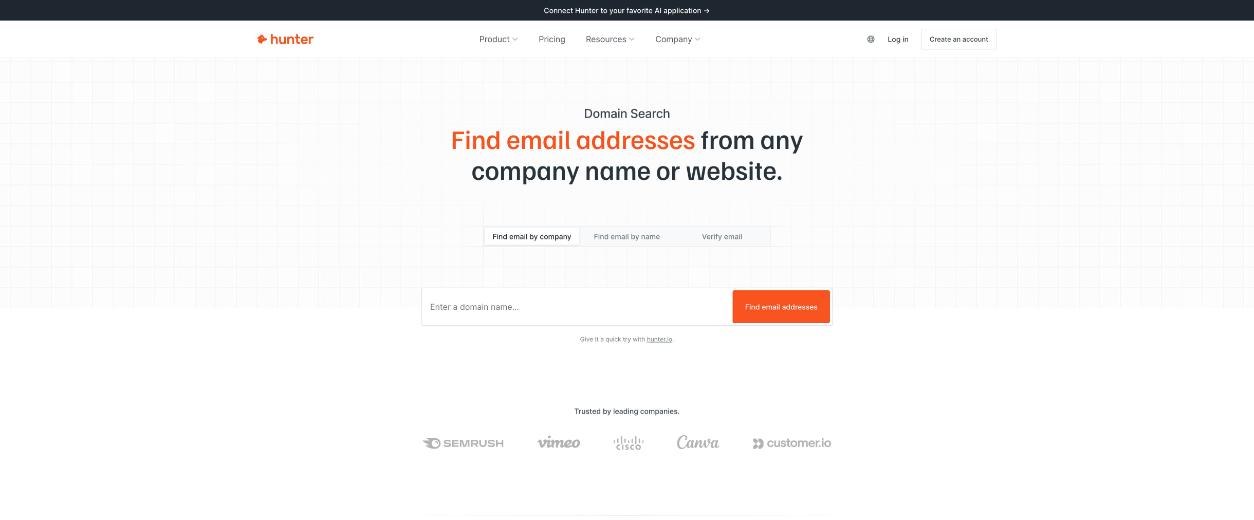
The free plan gives you 50 credits a month. Here is the trap: Domain Search uses a credit for each email it finds for a domain. Open Domain Search on a mid-sized agency, reveal its list of addresses, and a big part of your month can go on one company, most of it on people you will never write to.
So for this job, do not start with Domain Search. Start with a name.
The Hunter.io workflow, from agency list to sent email
Step 1: Build the list of 20 agencies yourself
Hunter has a B2B database called Discover, with basic filters on the free plan and an AI assistant (30 AI searches a month on Free). It can help, but for subcontracting I would build the first list by hand. You want agencies whose work you can actually do: a Webflow developer wants agencies that publish Webflow projects in their portfolio; a copywriter wants agencies whose case studies show content work. A filtered database cannot judge that for you.
For each agency, note three things in a spreadsheet: the domain, a recent project you genuinely like, and the name of the person most likely to hire freelancers. The team or about page usually tells you who that is.
Step 2: Use Email Finder for the one person you want
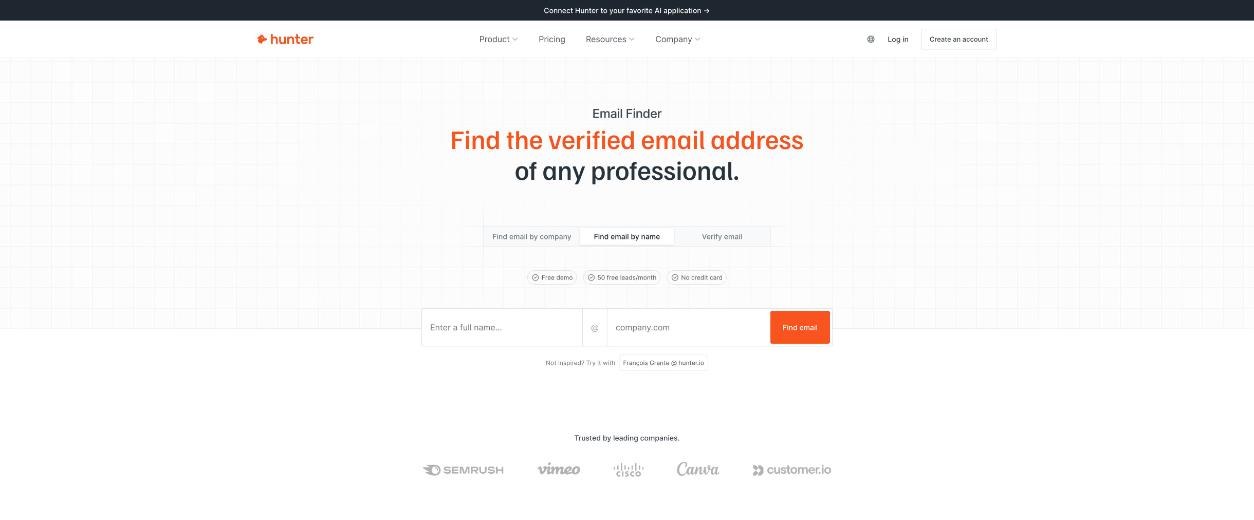
Hunter’s Email Finder takes a full name and a company domain and returns the most likely address. One credit if it finds one; nothing if it does not. Twenty agencies, twenty names: at most 20 credits.
If Email Finder returns nothing for a small agency, that is often a sign the founder uses a generic address like hello@ or studio@. In that case, write to the generic address and name the person in the first line. It is not ideal, but it beats guessing.
Step 3: Verify before you send
Paid plans include auto-verification. On the free plan, run the addresses through the Email Verifier: 0.5 credit each, so 20 addresses cost 10 credits. Hunter’s verifier page says you can also try five free checks a day without signing up.
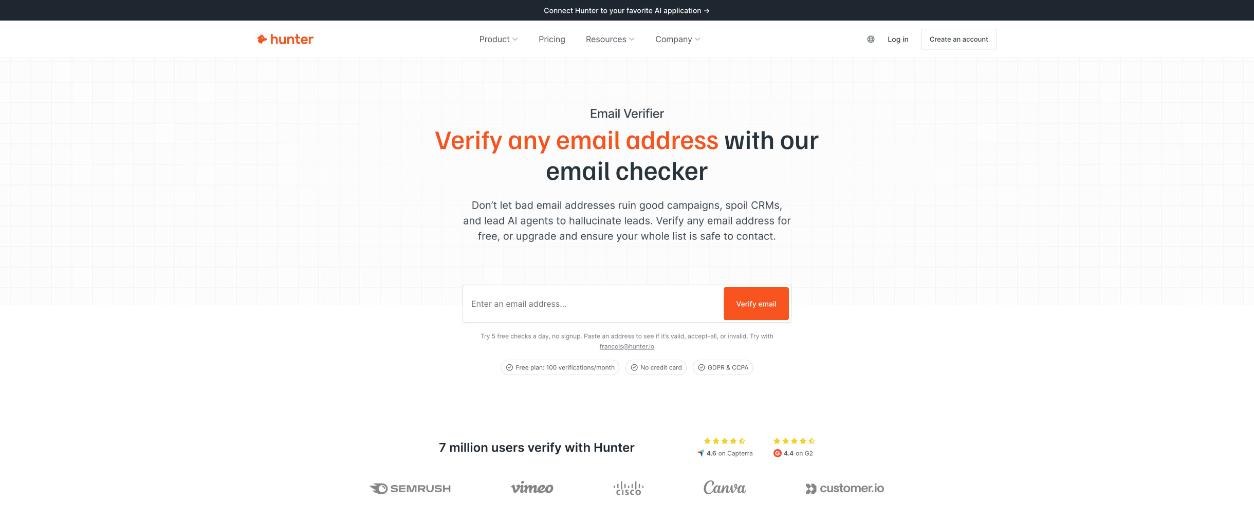
How I would treat each result:
- Valid: send.
- Invalid: do not send. Go back to the team page and check the name spelling, or fall back to the generic address.
- Accept-all: the agency’s mail server accepts any address, so the check cannot confirm this mailbox exists. If the address follows the same pattern as other addresses Hunter found for the company, I would send it. If it is a pure guess, I would not.
Bounces matter more for a freelancer than for a sales team. You are sending from your own domain, often the same one you invoice from. A handful of bounces from a careless list can hurt where your real client emails land.
Step 4: Send a short sequence from your own inbox
Hunter’s free plan includes Sequences with one connected email account and up to 500 recipients per sequence. For 20 agencies that is more than enough. I would keep it to two emails:
- Email 1: one sentence about the project of theirs you looked at, one sentence on what you do and the kind of overflow work you take, one link to a relevant piece of your work, and a plain question: “Do you work with freelancers for this?”
- Email 2, five to seven working days later: two lines, reply in the same thread, offer to send rates or availability for next month.
Stop there. Agencies remember the freelancer who sent three automated follow-ups. Keep every message one-to-one and relevant, and include a simple way to opt out. Cold email rules vary by country, so check what applies to you and the agencies you write to.
The free plan math for 20 agencies
| Action | Credits |
|---|---|
| Email Finder, 20 names (worst case all found) | 20 |
| Email Verifier, 20 addresses | 10 |
| Spare for re-checks and a few generic addresses | 20 |
| Total | 50 |
Twenty well-chosen agencies a month fits inside Hunter’s free plan, with room for mistakes, as long as you avoid opening Domain Search for every company. For most freelancers that is already a lot of pitching. Twenty personal emails, written properly, is a solid month of business development on top of client work.
When a paid Hunter.io plan starts to make sense
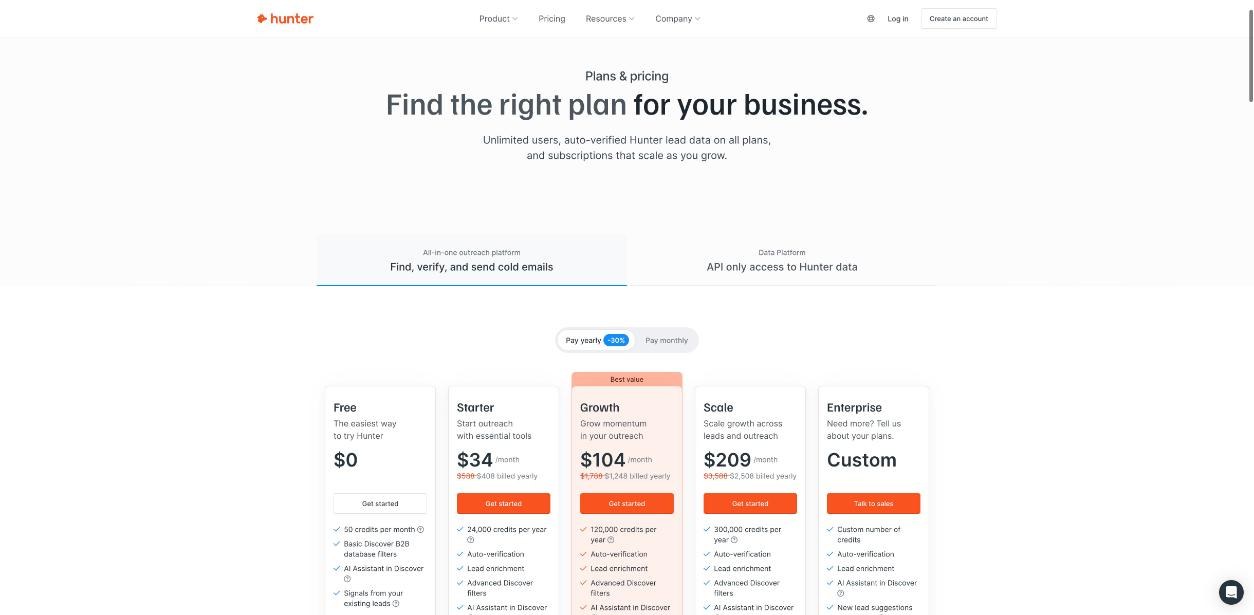
Hunter’s paid tiers, from the pricing page:
- Starter: $34 a month billed yearly ($408 a year; $588 for the same year at the monthly rate). 24,000 credits a year, available upfront. Auto-verification, lead enrichment, advanced Discover filters, an AI Writing Assistant, three connected email accounts and 2,500 recipients per sequence.
- Growth: $104 a month billed yearly ($1,248 a year), 120,000 credits a year, ten connected email accounts.
- Scale: $209 a month billed yearly ($2,508 a year), 300,000 credits a year, twenty connected email accounts.
For a solo freelancer, only Starter is relevant. Growth and Scale are built for sales teams. Starter is worth it in two situations: you pitch well beyond 20 agencies a month, or you want to use Domain Search freely to map who works where at larger agencies.
There is also a middle path the FAQ explicitly allows: take a subscription for one month, do a big research push, and cancel. You keep premium access until the end of the billing cycle. If you plan one serious agency outreach push per quarter, a single paid month at the monthly rate may cost less than a full year.
Where Hunter stops and your CRM starts
Hunter finds addresses and sends sequences. It is not where I would manage the relationship after an agency replies. Once a reply comes in, the agency belongs in whatever you use to track clients and retainers. I covered two options for that: Pipedrive for freelancers who sell retainers, and folk CRM for working a past-client list. Hunter’s pricing page lists CRM integrations, a browser extension, a Google Sheets add-on, an API and an MCP connection, so moving contacts across should not be manual work.
Who should skip Hunter.io
- Freelancers who get all their work through referrals or platforms. If you are not going to send cold email, you do not need an email finder.
- Anyone planning mass outreach from a personal domain. Hunter makes sending easy. Sending hundreds of untargeted emails from the domain you invoice from is still a bad idea.
- Freelancers targeting very small studios. Two-person agencies often publish one address on their site. You do not need a tool to find it.
My take
For a freelancer who wants agency work, Hunter.io’s free plan is enough to run a real monthly outreach routine: 20 named people, verified addresses and a two-step sequence from your own inbox. The key is using Email Finder on names you have already chosen instead of letting Domain Search spend your credits on whole companies. Upgrade to Starter only when the free plan is clearly the thing holding you back, or buy a single month for a focused push.
You can start on the free plan at Hunter.io without a credit card.
FAQ
Is Hunter.io free?
Yes. The free plan includes 50 credits a month, basic Discover filters, one connected email account and sequences of up to 500 recipients.
How many credits does an Email Finder search use?
One credit per email found. If Hunter cannot find the address, no credit is used.
Does Domain Search cost one credit per company?
No. Domain Search uses one credit for each email found. Bulk Domain Search uses one credit for up to ten emails found.
How much does email verification cost in credits?
0.5 credit per verified email. Unknown results are not counted.
How much is Hunter.io Starter?
$34 a month billed yearly ($408 a year), with 24,000 credits a year available upfront. Billed monthly, the same year costs $588.
Can I pay for one month and cancel?
Yes. Hunter’s FAQ says you can subscribe for a single month and cancel, and you keep premium access until the end of the billing cycle.